PhD Candidate Chloé Dhaille
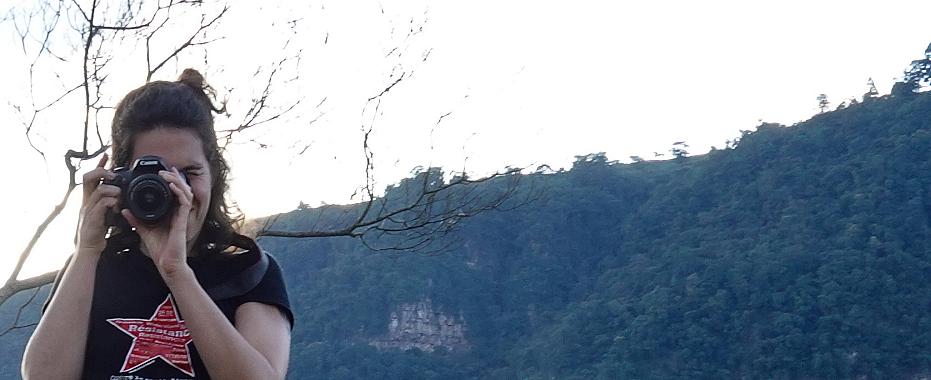
Chloé Dhaille is a PhD candidate at Université de Versailles Saint-Quentin-en-Yvelines (UVSQ) and a member of CEARC. Her research explores how local communities understand and respond to situations that threaten their ways of living, with particular attention to narratives, values, care and the forms of agency through which people collectively confront environmental change.
Within PREFER, Chloé’s priority field country is Colombia, with Venecia, Cundinamarca, as her main field site. Located in the Colombian Andes, the rural community of Venecia faces growing pressures on its water resources and on the continuity of peasant ways of life. Her research explores how inhabitants, and particularly women, narrate their relationships with water, land, plants, animals and one another, and how these relationships reveal values and forms of care that are often invisible in conventional accounts of environmental risk.
Her work draws on critical ethnography and life-story approaches. She is particularly interested in narratives that are overlooked or silenced, and in what they reveal about the ways people understand what is worth protecting and how they should act when their world is under pressure. Her recent work on Venecia examines the community’s collective care for water in the context of increasing scarcity, historical marginalisation of peasant communities and pressures over water resources.
Chloé’s research brings a strong gendered perspective to these questions. Her fieldwork pays particular attention to the experiences and knowledge of peasant women, including their roles as caregivers within families, farms and territories, and as custodians of knowledge concerning plants, water and the surrounding environment.
Through PREFER, she contributes to the project’s broader effort to understand terminal risks from the perspective of those who experience them, by examining the values, relationships and everyday practices through which a community responds when the conditions sustaining its way of life are threatened.