Senior scientist: Associate professor Jeanne Gherardi
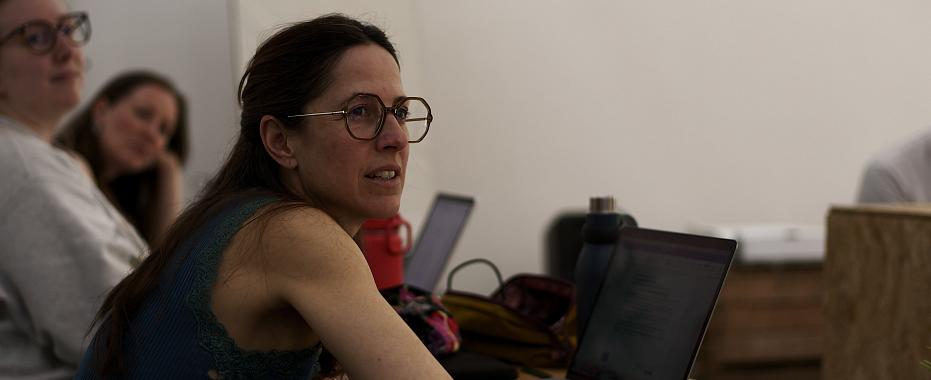
Jeanne Gherardi is Associate Professor in Climate and Environmental Sciences at Université de Versailles Saint-Quentin-en-Yvelines (UVSQ) and a member of CEARC. Trained as a paleoclimatologist, she has developed an increasingly interdisciplinary research approach that brings climate and environmental sciences into dialogue with social sciences and local experiences of environmental change. She is particularly interested in how scientific understandings of climate change can be put into conversation with the ways people themselves experience and interpret changing environments.
Within PREFER, Jeanne’s priority field country is Kalaallit Nunaat (Greenland), with Ittoqqortoormiit as her priority field site. Since 2021, she has conducted research there with Tanguy Sandré, exploring how inhabitants experience and narrate the profound transformations affecting their community, including changes in climate and sea ice, hunting practices, population, institutions and cultural continuity. Their work pays particular attention to the slow and often cumulative nature of these upheavals, and to dimensions of life that are not readily captured by conventional measures of climate vulnerability or resilience.
This research has led Jeanne to question resilience frameworks that can too easily place the emphasis on adaptation to externally defined shocks. Through sustained engagement with local narratives, she and her colleagues have explored how people “live with” change and how concerns about both material and immaterial dimensions of collective life emerge from their own accounts. This work combines climate and environmental knowledge with critical ethnographic and decolonial approaches.
Jeanne also contributes to interdisciplinary teaching and research on climate adaptation and ecological transition, and is involved in developing dialogue between scientific disciplines and other forms of knowledge. Within PREFER, she brings together this scientific and interdisciplinary background with her sustained engagement in Ittoqqortoormiit, contributing to an understanding of terminal threats grounded in lived experience rather than in environmental change alone.