November 2025 blog post: Ethics in research and Greenlandic fieldwork, raising to the challenge!
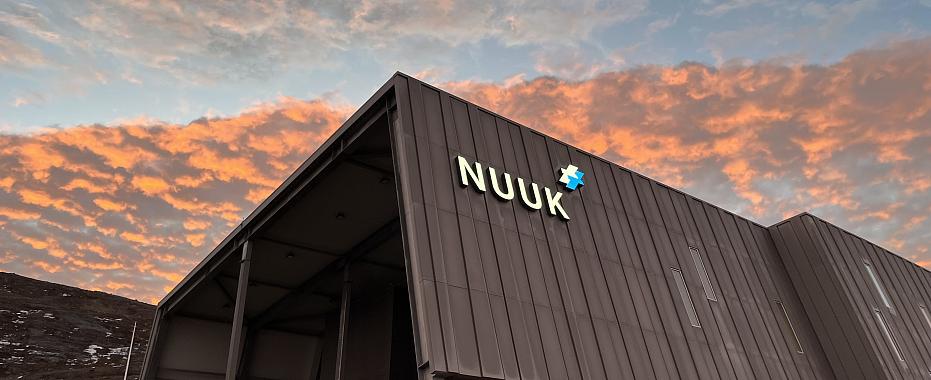
Last November, Jean-Michel and I travelled to Greenland to take part in Greenland Science Week. Sharing some of the results of PREFER and other projects with a wider Greenlandic audience was an important part of our mission. Research is not finished when the data have been collected and the papers written: for us, returning what has been learned, and opening it to discussion with the people and communities concerned, is part of the research process itself.
But there was another, rather different, objective to our visit. As our work in Greenland involves research with local communities, we wanted to explore whether it would be possible to have our research reviewed locally from an ethical perspective. We were looking for an institutional framework through which the ethical dimensions of our research could be considered in Greenland itself.
The answer, unfortunately, was that this was not currently possible in the way we had hoped. There is no simple institutional route for the kind of local ethical review we were looking for. We found this disappointing. Yet the difficulty also forced us to think more carefully about what we mean when we say that research is “ethical”.
An ethics committee can provide an important institutional safeguard. But ethical research cannot be reduced to obtaining an approval. This is particularly evident when research involves Indigenous communities, where questions of who has the right to define the research, who can speak for whom, how knowledge is represented, and what happens to stories and images after they have been collected cannot simply be delegated to an external review procedure.
This resonates strongly with the way PREFER has approached research more generally. We have been interested in the principles and values through which people themselves make sense of situations that threaten what matters to them. This has also led us to pay close attention to questions of epistemic diversity and, increasingly, to what might be called narrative sovereignty: the capacity of people and communities to retain agency over how their experiences, histories and futures are narrated - we are indebted to Naja Direndaum Graugaard for pointing to this fundamental concept in the course of the Greenland Science Week.
In Greenland, this means taking seriously the ethical guidance developed within the Inuit Circumpolar Council. In the absence of the local institutional review mechanism we had hoped to find, these guidelines provide an important reference for how we conduct ourselves as researchers. Our commitment is therefore not simply to “comply” with an external ethical standard, but to use these principles to reflect continuously on our relationships with the people with whom we work, on the production and circulation of knowledge, and on what we give back in return.
And, as so often in fieldwork, the most important things happen alongside the formal objectives of the mission.
During Greenland Science Week, we had the opportunity to meet again Peter Jensen from Inuk Media, the Greenlandic filmmaker with whom we have been working on the documentary about Uummannaq. The encounter was a reminder of the importance of working with people who are not simply asked to help researchers communicate their findings, but who bring their own skills, perspectives and ways of telling stories into the research process.
We also met Mari Kleist, Rector of the University of Greenland. Encounters such as this one may seem anecdotal when written into a research report, but they are part of what makes a research project possible: they create relationships, open conversations and help situate academic work within the institutional and social landscape in which it takes place.
And Greenland followed us even beyond Greenland. On the way to Nuuki, in Copenhagen, I was able to meet our PREFER (d :-) PhD candidate while she was onsite preparing her field observations concerning the Greenlandic diaspora in Stockholm. A small reminder that PREFER is now a network of people and places whose connections extend well beyond the formal geography of our field sites.
Perhaps this is one of the lessons of the mission. Ethical research is not a box to tick at the beginning of a project. It is a relationship that has to be maintained throughout the research process — in the choice of questions, in fieldwork, in the production of images and narratives, in the return of results, and in decisions about what happens to the knowledge produced.
Our difficulty in finding a local institutional mechanism for ethical review was therefore disappointing. But it also gave us an opportunity to make explicit something that was already central to the way we wanted to work: when research involves Indigenous communities, responsibility for its ethical consequences cannot be outsourced to an institution. It has to remain with us, and be continuously discussed with those with whom we conduct the research.
More later...